
French Phrases for Travel: Greetings, Food and Directions
French phrases for travel: greetings, please and thank you, ordering in a café, asking directions and emergencies, with simple sound guides and offline tips.
Published November 6, 2026 · By Frame Sixty Labs
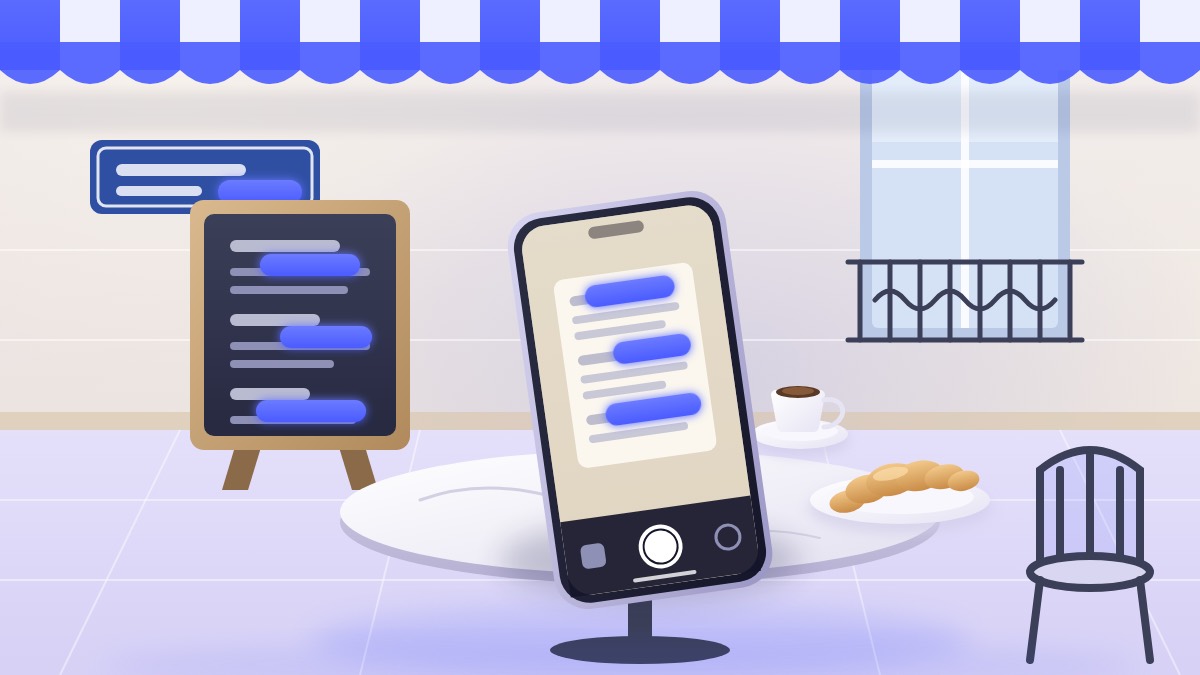
Quick answer: the French phrases for travel that matter most are bonjour (hello), s’il vous plaît (please), merci (thank you), excusez-moi (excuse me), parlez-vous anglais ? (do you speak English?), c’est combien ? (how much is it?), où est… ? (where is…?) and l’addition, s’il vous plaît (the bill, please). The single most important habit is to say bonjour before anything else, in every shop, café and ticket office. Learn these, then keep an offline translator for everything the phrase list does not cover.
French has a reputation for being hard to pronounce, but the spelling is the problem, not the sounds. The phrases below come with simple English sound guides, notes on when to use the polite form, and a short section on the rules that make the guides unnecessary.
What are the basic French greetings for travel?
Greetings come first because in France they are not optional. Asking for bread without a bonjour reads as rude, and the service will show it. Say it to every shopkeeper and bus driver, and say au revoir on the way out.
| French | English | Sounds like |
|---|---|---|
| Bonjour | Hello, good day | bon-ZHOOR |
| Bonsoir | Good evening | bon-SWAHR |
| Salut | Hi, bye (casual) | sa-LU |
| Au revoir | Goodbye | oh ruh-VWAHR |
| À bientôt | See you soon | ah byan-TOH |
| Bonne journée | Have a good day | bun zhoor-NAY |
Bonjour works all day until the early evening, when bonsoir takes over. Salut is for friends and people your own age who use it first. With staff, strangers and anyone older, bonjour is always the safe choice. Bonne journée is the usual parting line from a shopkeeper, and the reply is merci, vous aussi (thank you, you too).
How do you say please, thank you and excuse me in French?
These small words carry most of your politeness. S’il vous plaît is the polite form for strangers. S’il te plaît is for friends and children.
| French | English | Sounds like |
|---|---|---|
| S’il vous plaît | Please | seel voo PLEH |
| Merci | Thank you | mehr-SEE |
| Merci beaucoup | Thank you very much | mehr-SEE boh-KOO |
| De rien | You’re welcome | duh RYAN |
| Excusez-moi | Excuse me (to get attention) | ex-ku-zay MWAH |
| Pardon | Sorry, excuse me (to get past) | par-DON |
| Désolé / Désolée | I’m sorry (male / female) | day-zo-LAY |
| Oui / Non | Yes / No | wee / non |
Pardon does double duty. It is what you say squeezing through a crowded metro car, and with a rising tone it asks someone to repeat themselves.
What do you say when you don’t understand French?
These phrases buy you time. In Paris many people speak some English, and they switch more willingly once you have asked in French.
- Parlez-vous anglais ? (par-lay voo on-GLEH): Do you speak English?
- Je ne comprends pas. (zhuh nuh kom-PRON pah): I don’t understand.
- Je ne parle pas français. (zhuh nuh parl pah fron-SEH): I don’t speak French.
- Pouvez-vous parler plus lentement, s’il vous plaît ? (poo-vay voo par-LAY plu lont-MON): Can you speak more slowly, please?
- Pouvez-vous répéter ? (poo-vay voo ray-pay-TAY): Can you repeat that?
- Comment dit-on… ? (ko-mon dee-TON): How do you say…?
Common French phrases for cafés and restaurants
Ordering food is where most travellers use the most French. Un café is a small espresso, not a mug of filter coffee. Tap water is free, so ask for une carafe d’eau. Waiters will not bring the bill until you ask, which is politeness, not neglect.
| French | English |
|---|---|
| Une table pour deux, s’il vous plaît | A table for two, please |
| La carte, s’il vous plaît | The menu, please |
| Qu’est-ce que vous recommandez ? | What do you recommend? |
| Je voudrais… | I would like… |
| Un café, s’il vous plaît | A coffee (espresso), please |
| Une carafe d’eau, s’il vous plaît | A jug of tap water, please |
| Je suis végétarien / végétarienne | I’m vegetarian (male / female) |
| Je suis allergique à… | I’m allergic to… |
| C’est combien ? | How much is it? |
| L’addition, s’il vous plaît | The bill, please |
Je voudrais (zhuh voo-DREH) is the polite way to order, a soft “I would like”. Service compris on the menu means service is included, so no tip is expected, though a euro or two for good service is common.
If the menu has no English, our guide to reading a menu in French explains the difference between la carte and le menu and the cooking words that appear on every list. French uses the Latin alphabet, so a camera translator can also read the menu directly.
How do you ask for directions in French?
Où est… ? (oo EH) means “where is…?”. Put the place after it. For plurals, such as toilets, it becomes où sont… ? (oo SON).
| French | English |
|---|---|
| Où est la gare ? | Where is the train station? |
| Où sont les toilettes ? | Where are the toilets? |
| C’est loin ? | Is it far? |
| À gauche / à droite | On the left / on the right |
| Tout droit | Straight ahead |
| Un billet pour…, s’il vous plaît | A ticket to…, please |
| Quel quai ? | Which platform? |
In the metro, follow sortie for the exit and correspondance for a transfer. On trains, the platform is the quai and the carriage is the voiture. Street and road signs use a vocabulary of their own, and our French street signs guide covers the ones that catch visitors out, such as toutes directions and impasse.
What French phrases do I need in an emergency?
Keep these in a note on your phone. The European emergency number 112 works across France. A pharmacy, marked by a green cross, is the first stop for minor problems.
- Au secours. (oh suh-KOOR): Help.
- J’ai besoin d’un médecin. (zhay buh-ZWAN dun mayd-SAN): I need a doctor.
- Où est la pharmacie ? (oo eh la far-ma-SEE): Where is the pharmacy?
- Appelez la police. (ap-play la po-LEES): Call the police.
- J’ai perdu mon passeport. (zhay pehr-DU mon pass-POR): I lost my passport.
How do you pronounce French words correctly?
A handful of rules cover almost every phrase on this page. The sound guides above are approximate, but these rules get you close enough to be understood.
| Spelling | Sound | Example |
|---|---|---|
| Final consonants (s, t, d, x, p) | Usually silent | Paris (pa-REE), beaucoup (boh-KOO) |
| h | Always silent | hôtel (oh-TEL) |
| ch | “sh” | chambre (SHOM-bruh, room) |
| j, and g before e or i | “zh” as in measure | bonjour, fromage (fro-MAZH, cheese) |
| an, en, on, in | Nasal vowels, said through the nose | pain (pan, bread), vin (van, wine) |
| u | Say “ee” with rounded lips | tu, rue (street) |
| oi | “wah” | moi (mwah), au revoir |
The r is made in the back of the throat. Stress is light and falls on the last syllable of a phrase. When a word ending in a silent consonant is followed by a vowel, the consonant is pronounced: vous avez (voo za-VAY, you have). That linking is why spoken French sounds like one long word.
How can I translate French on my phone while travelling?
A phrase list covers the predictable moments. A translator app covers the rest: a pharmacist’s answer, a parking notice, a hand-written specials board. Here is how it works in AI Translate:
- Before you leave, download the French pack (about 30 MB) so it works without signal.
- To say something, open the Translate tab, type or speak your sentence in English and tap the speaker button. The phone reads the French aloud with its installed text-to-speech voice.
- To read a sign or menu, open the Text tab and point the camera at it. The English is drawn over the French, block by block. Tap Freeze to hold the frame.
- For a photo you already took, tap the gallery button on the camera screen. The translation appears in a sheet you can copy.
Typed text, the camera and photo import all work offline once the pack is downloaded. Voice input uses your phone’s own speech recognition, so it works offline only where your phone supports offline dictation for French. For French the app plays the pronunciation as audio rather than showing a written sound guide, which is why the guides in this post are worth keeping. There is no account, no ad trackers, and photos are never uploaded. The offline translator page explains how the language packs work with no connection.
If your trip continues over the Alps, our common Italian phrases for travel post follows the same format as this one.
Start with ten phrases
Bonjour, au revoir, s’il vous plaît, merci, excusez-moi, pardon, parlez-vous anglais ?, c’est combien ?, où est… ? and l’addition, s’il vous plaît will carry you through most days in Paris, Lyon, Nice or a village market. For signs, menus and anything longer, see the French translator page for how to translate French with your camera, offline, anywhere in France.
Frequently asked questions
What are the most useful French phrases for travel?
Bonjour (hello), s'il vous plaît (please), merci (thank you), excusez-moi (excuse me), parlez-vous anglais ? (do you speak English?), c'est combien ? (how much is it?), où est… ? (where is…?) and l'addition, s'il vous plaît (the bill, please). Say bonjour before you ask for anything and the rest goes more smoothly.
How do you say excuse me in French?
Excusez-moi is the polite form for getting someone's attention, such as a waiter or a stranger in the street. Pardon is what you say to get past someone or after bumping into them. Désolé, or désolée if you are a woman, means I'm sorry.
Can I translate French on my phone without internet?
Yes. An offline translator app with the French pack downloaded can translate typed text, read French signs and menus with the camera and speak phrases aloud with no connection. Voice input is the one part that may still need the phone's online speech recognition.
Try it before your next trip.
AI Translate is free to start. Download a language once to translate typed text and everyday objects offline, and read Latin-script signs and menus with the camera.