
Spanish Menu Guide: Words, Dishes and How to Translate Them
Read a Spanish menu with confidence: section names, common dishes, cooking terms and allergy phrases, plus how to translate one with your phone camera offline.
Published September 30, 2026 · By Frame Sixty Labs
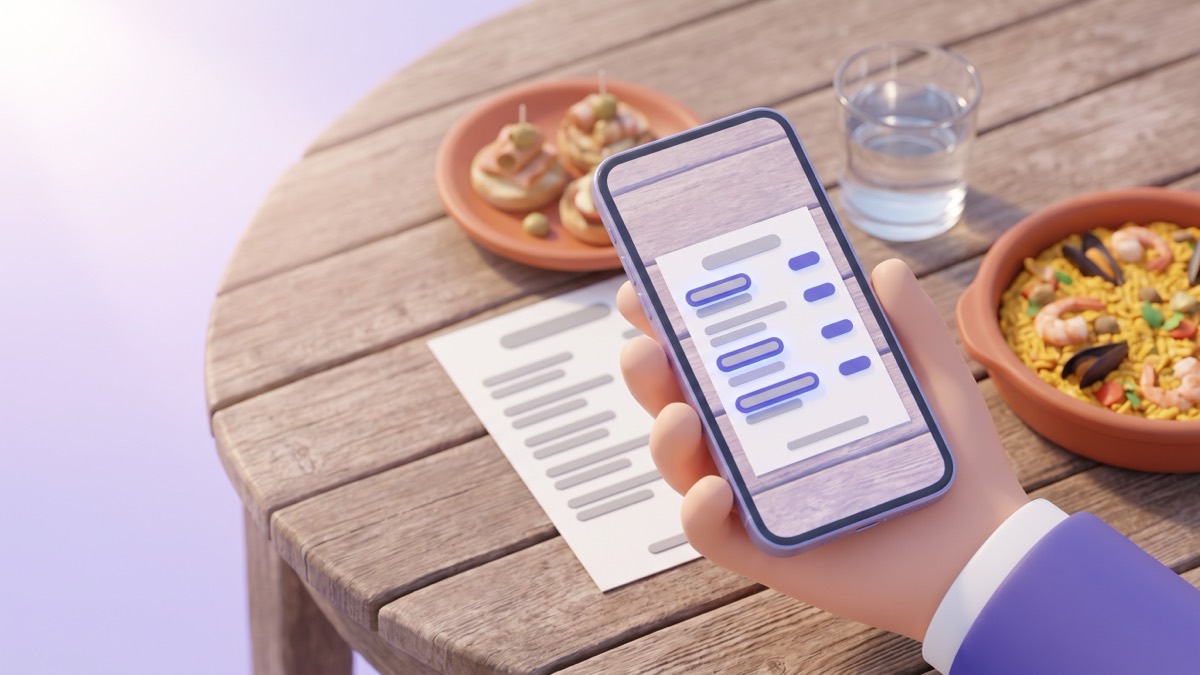
Quick answer: a Spanish menu is usually split into entrantes (starters), primeros (first courses), segundos (main courses), postres (desserts) and bebidas (drinks). Learn a dozen cooking words such as a la plancha (griddled), frito (fried) and al horno (baked), and most dishes become easy to guess. For everything else, point a camera translator at the menu and the English appears over the Spanish text, even offline.
Ordering from a menu in Spanish is less about grammar and more about knowing where things live on the page. Once you recognize the section names and the handful of words that describe how food is cooked, you can read most menus in Spain and Latin America without help. This guide covers those words, the dishes you will see most, and a quick way to translate the rest.
How is a Spanish menu organized?
Most restaurant menus follow the order of the meal. The names change a little between Spain and Latin America, but the structure is the same.
| Spanish | English | Where you see it |
|---|---|---|
| Entrantes / Entradas | Starters | Entrantes in Spain, entradas in Latin America |
| Primeros (platos) | First courses | Spain, often soups, salads, pasta or rice |
| Segundos (platos) | Main courses | Spain, usually meat or fish |
| Platos principales / Platos fuertes | Main dishes | Latin America |
| Tapas / Raciones | Small plates / Sharing plates | Spain; a ración is larger than a tapa |
| Postres | Desserts | Everywhere |
| Bebidas | Drinks | Everywhere |
| Guarniciones | Side dishes | Everywhere |
Two terms trip up visitors. La carta is the full à la carte menu, while el menú del día is a fixed-price lunch with a first course, a main, a dessert or coffee, and often bread and a drink. In Spain it is usually the best-value meal of the day. Also note that an entrada in Latin America is a starter, not a main course as “entrée” is in the United States.
What do Spanish cooking terms on a menu mean?
These words tell you how a dish is prepared. They appear on almost every Spanish food menu.
| Spanish | English |
|---|---|
| a la plancha | cooked on a flat griddle |
| a la parrilla | grilled over a flame |
| a la brasa | cooked over embers or charcoal |
| al horno | baked or oven-roasted |
| asado | roasted |
| frito / rebozado | fried / battered and fried |
| guisado / estofado | stewed |
| al ajillo | with garlic, usually sizzling in olive oil |
| crudo | raw |
| casero | homemade |
| del día | of the day |
Pair these with a few basic ingredients and you can decode a line like “gambas al ajillo” (garlic prawns) or “pollo asado” (roast chicken) on your own. Useful ingredient words include pollo (chicken), cerdo (pork), ternera (veal or beef in Spain), res (beef in Latin America), pescado (fish), mariscos (seafood), gambas or camarones (prawns), queso (cheese) and verduras (vegetables).
Which dishes appear most on menus in Spain and Latin America?
You will recognize some of these, but a few are not what their names suggest.
- Tortilla española: a thick potato and egg omelette. In Mexico and Central America, a tortilla is a flat corn or wheat bread instead.
- Patatas bravas: fried potatoes with a spicy sauce, sometimes with aioli as well.
- Gazpacho: a cold tomato and vegetable soup, served in summer.
- Pulpo a la gallega: boiled octopus with paprika, olive oil and salt.
- Croquetas: fried croquettes, often filled with ham or chicken in a creamy base.
- Jamón ibérico: cured ham from Iberian pigs, served in thin slices.
- Paella: a rice dish cooked in a wide pan. Many restaurants serve it for two people or more.
- Ceviche: raw fish cured in lime juice, common in Peru and along the Latin American coast.
- Churros con chocolate: fried dough sticks with thick hot chocolate for dipping.
If a dish name is a proper noun or a regional specialty, a literal translation may look odd. “Pulpo a la gallega” becomes “Galician-style octopus”, which is accurate but does not tell you much. In that case, ask the server or look at the ingredients listed underneath.
How do I translate a Spanish menu with my phone camera?
Printed Spanish uses the Latin alphabet, so a camera translator reads it well. Here is how to do it with AI Translate:
- Before your trip, open the app and download the Spanish language pack (about 30 MB) while you have Wi-Fi.
- Set the language pair to Spanish and English.
- Open the Text tab and point the camera at the menu.
- Read the English translation drawn over the original text, block by block.
- Tap Freeze to hold the frame still so you can read it without keeping your hand steady.
If you already took a photo of the menu, tap the gallery button on the camera screen and pick the photo. The recognized text is translated and shown in a sheet at the bottom of the screen, where you can copy it. The translation appears in that sheet, not over the photo.
Printed menus work best. Handwritten chalkboards, cursive fonts and glossy pages under strong light are harder for any text recognition to read. If a line comes out wrong, move closer, tilt the menu away from the glare, or type the dish name into the Translate tab instead. Our guide on how to translate a picture covers more tips for tricky photos.
Can I translate a menu without internet?
Yes, as long as you download the language pack first. Restaurants abroad often have weak signal, and roaming data can be expensive. With the Spanish pack on your phone, the camera, photo import and typed translation all work in airplane mode. Voice input is the exception, because it uses your phone’s own speech recognition, which may need a connection. See how offline translation works for the full picture.
The free plan covers your chosen language pair with 15 translations a day, which is enough for a few meals. Premium starts at $1.99 a month if you need more.
What should I say when ordering or asking about allergies?
Knowing a few phrases makes ordering much smoother. Type them into the Translate tab and tap the speaker button to hear how they sound.
| Spanish | English |
|---|---|
| ¿Qué me recomienda? | What do you recommend? |
| Quisiera… | I would like… |
| Soy alérgico / alérgica a los frutos secos. | I am allergic to nuts. |
| ¿Lleva gluten? | Does it contain gluten? |
| Sin gluten | Gluten-free |
| Soy vegetariano / vegetariana. | I am vegetarian. |
| La cuenta, por favor. | The bill, please. |
Use alérgico and vegetariano if you are a man, and alérgica and vegetariana if you are a woman. For a serious allergy, show the written sentence to the server as well as saying it.
What else should I look for on the menu?
A few small notes change the price or what arrives at the table:
- IVA incluido: tax is included in the price.
- Pan y cubierto: a charge for bread and cutlery, common in some tourist areas.
- S/M or según mercado: market price, often used for fresh fish and seafood. Ask before you order.
- Media ración: a half portion, a good way to try more dishes.
- Para compartir: for sharing.
If you are travelling on to Portugal or Italy, the same camera method works for their menus too, since both languages use the Latin alphabet. Our roundup of the best offline translator apps compares how the main options handle this.
Next step
Once you know the section names and cooking terms, a Spanish menu becomes a short list of guesses you can confirm with a camera. For more on reading signs, menus and labels in Spanish, including offline use and pronunciation audio, visit the Spanish translator page.
Frequently asked questions
How do you say menu in Spanish?
The word is menú, written with an accent on the u. In Spain you will also see la carta for the full menu, while menú del día means the fixed-price lunch of the day.
Can I translate a Spanish menu without internet?
Yes. Download the Spanish language pack in an offline translator app before you travel, then point the camera at the menu. AI Translate reads printed Spanish and shows the English over it with no connection.
What is the difference between a la plancha and a la parrilla?
A la plancha means cooked on a hot flat griddle, usually with a little oil. A la parrilla means grilled over an open flame or on a grill with bars.
Try it before your next trip.
AI Translate is free to start. Download a language once to translate typed text and everyday objects offline, and read Latin-script signs and menus with the camera.