
Menu in Italian: Il Menù, La Carta and How to Read One
How to say menu in Italian, what il menù, la carta and menù fisso mean, and the course names, cooking words and phrases you need to order well.
Published October 7, 2026 · By Frame Sixty Labs
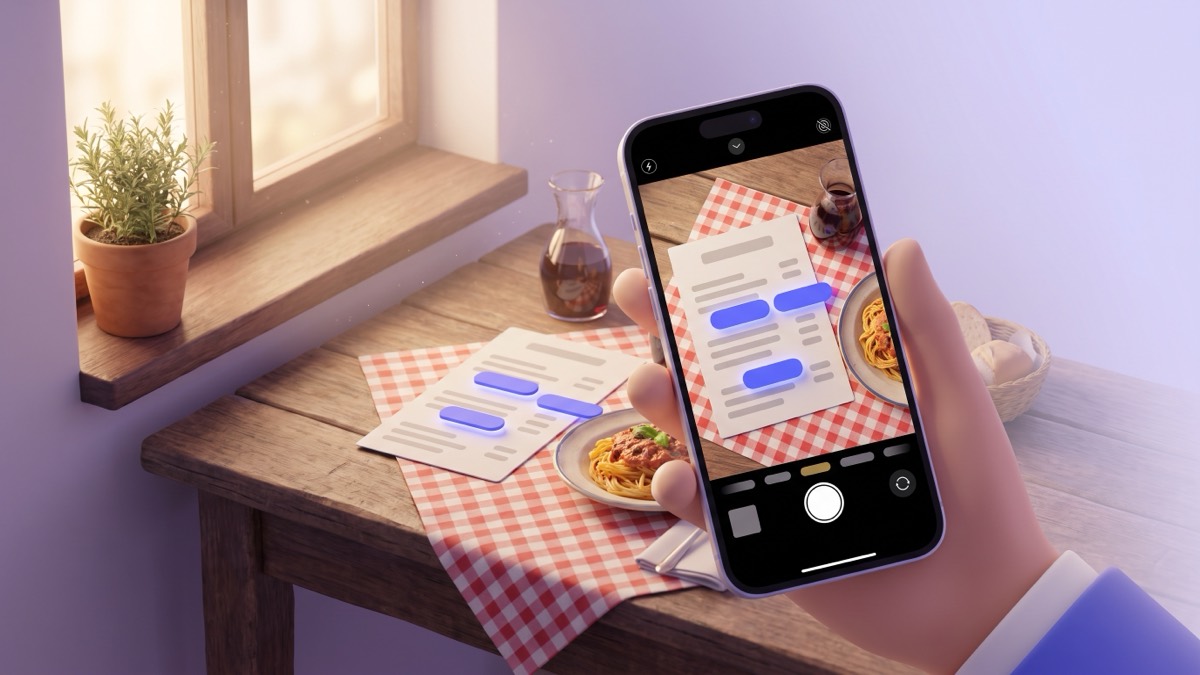
Quick answer: The word for a restaurant menu in Italian is il menù (meh-NOO), also spelled il menu. Some restaurants use la carta instead. A menù fisso or menù del giorno is a set meal at one price, not the full list. To ask for the menu, say “Il menù, per favore”.
How do you say menu in Italian?
Italian is simpler than French or German here. The everyday word is the same one English borrowed, with the stress on the last syllable. Written menus use both spellings, with and without the accent, and both are correct.
| Italian | Say it | What it means |
|---|---|---|
| il menù / il menu | eel meh-NOO | The list of dishes you read and order from |
| la carta | lah KAR-tah | The menu, used by some formal restaurants |
| il menù fisso | eel meh-NOO FEES-soh | A set meal of several courses at one price |
| il menù del giorno | eel meh-NOO del JOR-noh | Today’s set meal, common at lunch |
| il menù turistico | eel meh-NOO too-REES-tee-koh | A cheap set meal aimed at visitors |
| il menù degustazione | eel meh-NOO deh-goos-tah-TSYOH-neh | A tasting menu of small courses |
| la lista dei vini | lah LEES-tah day VEE-nee | The wine list |
| il piatto del giorno | eel PYAHT-toh del JOR-noh | The dish of the day |
If you ask for “il menù del giorno”, you are asking about the set lunch, not the full menu. “Il menù” on its own is always understood as the list.
Many menus print coperto near the bottom. That is a cover charge of a few euros per person, for bread and the table setting, and it is normal. Servizio is a service charge. If you see either one, a tip beyond rounding up is not expected.
How is an Italian menu organized?
An Italian menu follows the order of a traditional meal, and the headings barely change from one region to the next. Nobody expects you to order every course. Most people choose two, often a primo and a secondo, or an antipasto and a primo.
| Italian | English | Notes |
|---|---|---|
| Antipasti | Starters | Cured meats, cheeses, bruschetta, marinated vegetables |
| Primi (piatti) | First courses | Pasta, risotto, gnocchi and soups |
| Secondi (piatti) | Second courses | Meat or fish, usually served on its own |
| Contorni | Side dishes | Vegetables, salad or potatoes, ordered separately |
| Formaggi | Cheeses | Sometimes grouped with desserts |
| Dolci | Desserts | Tiramisù, panna cotta, gelato |
| Pizze | Pizzas | Often a separate page, and often evening only |
| Bevande | Drinks | Water, soft drinks, beer |
| Vini | Wines | Red is rosso, white is bianco, house wine is vino della casa |
| Caffè | Coffee | Ordered after dessert, not with it |
Two things surprise first-time visitors. A secondo arrives with nothing on the plate but the meat or fish, so order a contorno if you want vegetables. And a cappuccino after dinner is unusual, so the server may look puzzled. An espresso, which Italians simply call un caffè, is the normal end to a meal.
Prices on fish dishes sometimes read “all’etto” or “all’hg”. That means the price is per 100 grams, and the final cost depends on the weight of the fish you choose.
What do Italian cooking terms on a menu mean?
These Italian menu terms describe how a dish is cooked. Most follow the name of the main ingredient, so “pollo arrosto” is roast chicken and “pesce alla griglia” is grilled fish.
| Italian | Say it | English |
|---|---|---|
| alla griglia / ai ferri | AHL-lah GREEL-yah | Grilled |
| al forno | ahl FOR-noh | Baked or oven-roasted |
| arrosto | ar-ROS-toh | Roasted |
| fritto | FREET-toh | Fried |
| al vapore | ahl vah-POH-reh | Steamed |
| in umido | een OO-mee-doh | Stewed in a little sauce |
| brasato | brah-ZAH-toh | Braised |
| affumicato | ahf-foo-mee-KAH-toh | Smoked |
| ripieno | ree-PYEH-noh | Stuffed |
| crudo | KROO-doh | Raw, as in prosciutto crudo |
| cotto | KOT-toh | Cooked, as in prosciutto cotto |
| fatto in casa | FAHT-toh een KAH-zah | Homemade |
| della casa | DEL-lah KAH-zah | The house version, as in vino della casa |
The main ingredient words are short. Manzo is beef, vitello is veal, maiale is pork, pollo is chicken, agnello is lamb and coniglio is rabbit. Pesce is fish, frutti di mare are seafood, gamberi are prawns and vongole are clams. Funghi are mushrooms, melanzane are aubergines, carciofi are artichokes and formaggio is cheese.
What do Italian dish names actually describe?
Italian dish names usually tell you the pasta shape, then the sauce, joined by alla, al or con. “Alla” means “in the style of”, so spaghetti alla carbonara is spaghetti in the carbonara style, and penne all’arrabbiata is penne in the “angry” style, which means spicy. “Con” means “with”, so tagliatelle con funghi is tagliatelle with mushrooms.
A few names mean less than they seem. Alla milanese usually means breaded and fried. Alla fiorentina on a steak means a thick cut of beef grilled rare. Alla napoletana on a pizza means tomato, garlic and oregano, and alla romana often means with pecorino cheese. Pasta al pomodoro is simply pasta with tomato sauce, and pasta in bianco is plain pasta with oil or butter.
Some words are easy to confuse. Pesca is peach and pesce is fish. Peperoni are bell peppers, not the spicy sausage, which Italians call salame piccante. Latte on its own is a glass of milk, so order a caffè latte if you want coffee in it.
Which Italian phrases help when you order?
A few polite phrases cover a whole meal. Per favore means please, and grazie means thank you.
| Italian | Say it | English |
|---|---|---|
| Il menù, per favore. | eel meh-NOO, per fah-VOH-reh | The menu, please. |
| Vorrei … | vor-RAY | I would like … |
| Cosa mi consiglia? | KOH-zah mee kon-SEEL-yah | What do you recommend? |
| È vegetariano? | eh veh-jeh-tah-RYAH-noh | Is it vegetarian? |
| Sono allergico alle noci. | SOH-noh ahl-LER-jee-koh AHL-leh NOH-chee | I am allergic to nuts. (A woman says allergica.) |
| Senza cipolla, per favore. | SEN-tsah chee-POL-lah, per fah-VOH-reh | Without onion, please. |
| Il conto, per favore. | eel KON-toh, per fah-VOH-reh | The bill, please. |
Water comes in two kinds, and the server will ask. Acqua naturale is still water and acqua frizzante or gassata is sparkling. Tap water is acqua del rubinetto, and many restaurants only serve bottled.
How do you translate an Italian menu with your phone?
Italian is written in the Latin alphabet, so a camera translator can read a printed menu directly. In the current version of AI Translate, the camera reads Latin-script text, and Italian is included, accented vowels as well.
- Before you travel, download the Italian and English language packs. Each one is about 30 MB.
- Open the Text tab and point the camera at the menu. Hold the phone steady and parallel to the page.
- The translation is drawn over the original text, block by block. Tap Freeze to hold the frame so you can read it without keeping your arm still.
- If you photographed the menu earlier, tap the gallery button on the camera screen and pick the photo. The translated text appears in a sheet that you can copy.
- For a single word the camera struggles with, type it into the Translate tab.
Once the packs are downloaded, all of this works with no signal, which helps in a stone-walled osteria or on a ferry. The offline translator page explains what to set up before you leave.
Expect a few limits. Handwritten chalkboard specials are hard for any camera to read. Dish names are often left as names rather than translated, so “carbonara” stays “carbonara”, which is usually what you want. And a literal result can be odd, such as “jump in the mouth” for saltimbocca, a veal dish with ham and sage. The guide to translating a picture on your phone covers lighting and angle in more detail.
If your trip crosses borders, the same approach works for a menu in French, a menu in German and a Spanish menu.
What should you remember?
Ask for “il menù”, and order a contorno if you want vegetables with your secondo. Read the course headings first, then look for the cooking word after the ingredient and the “alla” that names the style. Check for coperto on the bill before you add a tip.
For more Italian help, including typed translation, spoken audio and offline use, see the Italian translator page.
Frequently asked questions
How do you say menu in Italian?
The list of dishes in an Italian restaurant is il menù, also written il menu. Some restaurants call it la carta. To ask for it, say "Il menù, per favore".
What is the difference between primi and secondi on an Italian menu?
Primi are first courses, usually pasta, risotto or soup. Secondi are second courses of meat or fish, and side dishes are listed separately as contorni.
Can I translate an Italian menu with my phone offline?
Yes. Italian uses the Latin alphabet, so a camera translator with a downloaded Italian language pack can read a printed menu with no internet connection.
Try it before your next trip.
AI Translate is free to start. Download a language once to translate typed text and everyday objects offline, and read Latin-script signs and menus with the camera.