
Menu in German: Speisekarte, Menü and How to Read One
How to say menu in German, why die Speisekarte and das Menü mean different things, and the section names, cooking words and phrases you need to order.
Published October 5, 2026 · By Frame Sixty Labs
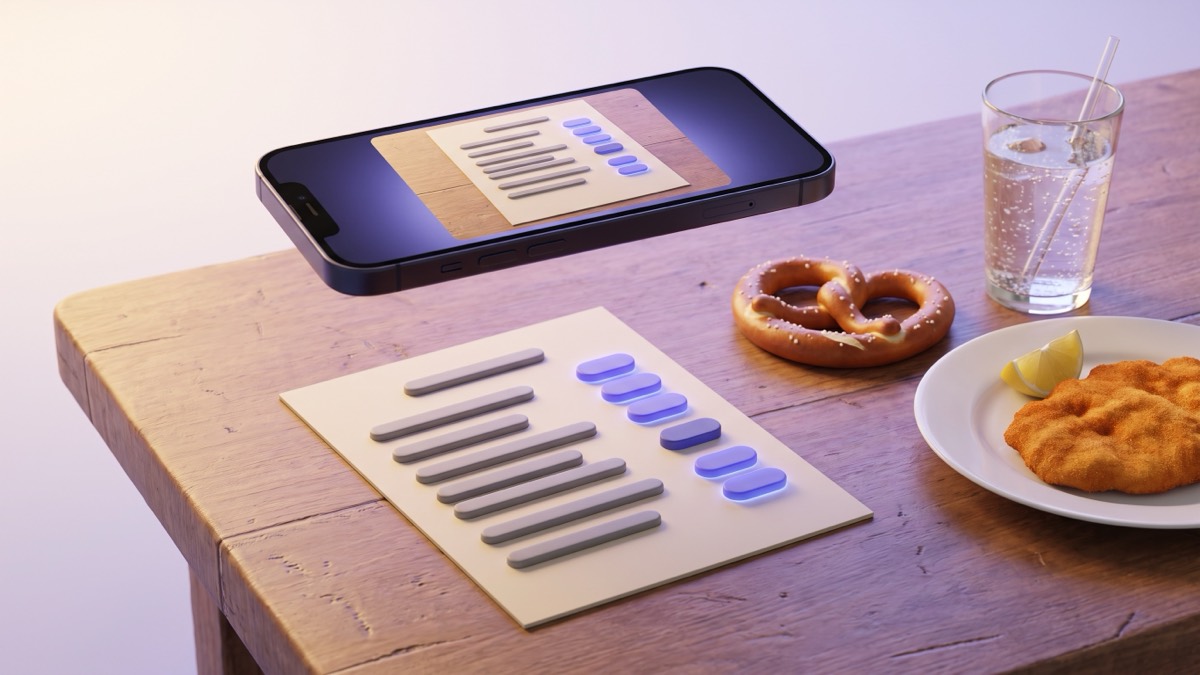
Quick answer: The word for a restaurant menu in German is die Speisekarte (SHPY-zuh-kar-tuh), often shortened to die Karte. The German word das Menü is a false friend: it means a set meal of several courses at a fixed price. To ask for the menu, say “Die Speisekarte, bitte”.
How do you say menu in German?
English uses one word for two things. German splits them, in the same way French does.
| German | Say it | What it means |
|---|---|---|
| die Speisekarte | SHPY-zuh-kar-tuh | The list of dishes you read and order from |
| die Karte | KAR-tuh | The short everyday form of Speisekarte |
| das Menü | meh-NUE | A set meal of several courses at one price |
| die Getränkekarte | guh-TRENK-uh-kar-tuh | The drinks list |
| die Weinkarte | VINE-kar-tuh | The wine list |
| die Tageskarte | TAH-guhs-kar-tuh | The list of today’s specials |
| das Tagesgericht | TAH-guhs-guh-rikht | The dish of the day |
| der Mittagstisch | MIT-tahks-tish | A lunch deal, usually on weekdays |
“Speise” means food or dish, and “Karte” means card, so Speisekarte is literally a “food card”. If you ask for “das Menü”, the server may think you want the set meal. Asking for “die Karte” is always safe.
One more trap sits on computer and phone screens. A software menu is also “das Menü” in German, so translation tools sometimes pick the wrong word when you look up “menu” without context.
How is a German menu organized?
A German menu follows the order of the meal, and the headings repeat from restaurant to restaurant. Learn these and you can find your way around almost any Speisekarte.
| German | English | Notes |
|---|---|---|
| Vorspeisen | Starters | Literally “before dishes” |
| Suppen | Soups | Often their own section |
| Salate | Salads | A “Beilagensalat” is a small side salad |
| Hauptgerichte / Hauptspeisen | Main courses | Sometimes split into Fleisch (meat) and Fisch (fish) |
| Vegetarische Gerichte | Vegetarian dishes | “Vegan” is the same word |
| Beilagen | Side dishes | Often included with the main |
| Nachspeisen / Desserts | Desserts | “Nachtisch” also appears |
| Getränke | Drinks | Split into alkoholfreie Getränke, Biere and Weine |
| Für Kinder / Kindergerichte | Children’s dishes |
In Austria the headings are the same, but some food words change. Potatoes are Erdäpfel instead of Kartoffeln, and whipped cream is Schlagobers instead of Sahne.
Many menus print small numbers or letters after a dish. These point to a key at the bottom of the page that lists allergens and additives, such as gluten, nuts or milk. It is worth finding that key before you order.
What do German cooking terms on a menu mean?
These German menu terms tell you how a dish was prepared. Most are past participles that begin with “ge”, which makes them easy to spot.
| German | Say it | English |
|---|---|---|
| gebraten | guh-BRAH-ten | Pan-fried or roasted |
| gebacken | guh-BAH-ken | Baked; in the south, often breaded and fried |
| gegrillt | guh-GRILT | Grilled |
| gekocht | guh-KOKHT | Boiled |
| gedünstet | guh-DUENS-tet | Steamed or gently stewed |
| geschmort | guh-SHMORT | Braised |
| geräuchert | guh-ROY-khert | Smoked |
| paniert | pah-NEERT | Breaded |
| überbacken | UE-ber-bah-ken | Topped with cheese and browned |
| hausgemacht | HOWS-guh-makht | Homemade |
| vom Fass | fom FAHS | On tap, for beer |
The main ingredient words are short. Schwein is pork, Rind is beef, Kalb is veal, Hähnchen or Huhn is chicken, Pute is turkey and Lamm is lamb. Kartoffeln are potatoes, Pilze are mushrooms, Käse is cheese and Ei is egg.
Why are German dish names so long?
German joins words together to build new ones, and menus are full of these compounds. The trick is to read them from the end. The last part tells you what the thing is, and the parts before it describe it.
- Schweinebraten = Schwein (pork) + Braten (roast): roast pork
- Kartoffelsalat = Kartoffel (potato) + Salat (salad): potato salad
- Rinderroulade = Rinder (beef) + Roulade (roll): a rolled, braised slice of beef
- Apfelstrudel = Apfel (apple) + Strudel: apple strudel
- Bratkartoffeln = Brat (fried) + Kartoffeln (potatoes): fried potatoes
Some classic names need a little background. A Wiener Schnitzel is made from veal. A Schnitzel Wiener Art (“Viennese style”) is the same idea made with pork. Spätzle are soft egg noodles, Knödel are dumplings, an Eintopf is a thick one-pot stew, and Sauerbraten is beef marinated in vinegar and then braised.
Which German phrases help when you order?
A few polite phrases cover most of a meal. “Bitte” means please, and it goes at the end.
| German | Say it | English |
|---|---|---|
| Die Speisekarte, bitte. | dee SHPY-zuh-kar-tuh, BIT-tuh | The menu, please. |
| Ich hätte gern … | ikh HET-tuh gairn | I would like … |
| Was empfehlen Sie? | vahs emp-FAY-len zee | What do you recommend? |
| Ist das vegetarisch? | ist dahs veh-geh-TAH-rish | Is that vegetarian? |
| Ich bin allergisch gegen Nüsse. | ikh bin ah-LAIR-gish GAY-gen NUES-suh | I am allergic to nuts. |
| Ohne Zwiebeln, bitte. | OH-nuh TSVEE-beln, BIT-tuh | Without onions, please. |
| Die Rechnung, bitte. | dee REKH-noong, BIT-tuh | The bill, please. |
Water needs its own note. If you ask for “Wasser”, you will usually get bottled sparkling water. Stilles Wasser is still water, and mit Kohlensäure means with bubbles. Tap water is Leitungswasser, and not every restaurant serves it.
How do you translate a German menu with your phone?
German is written in the Latin alphabet, so a camera translator can read a printed menu directly. In the current version of AI Translate, the camera reads Latin-script text, and German is included, umlauts and ß as well.
- Before you travel, download the German and English language packs. Each one is about 30 MB.
- Open the Text tab and point the camera at the menu. Hold the phone steady and parallel to the page.
- The translation is drawn over the original text, block by block. Tap Freeze to hold the frame so you can read without keeping your arm still.
- If you photographed the menu earlier, tap the gallery button on the camera screen and pick the photo. The translated text appears in a sheet that you can copy.
- For a single word the camera struggles with, type it into the Translate tab.
Once the packs are downloaded, all of this works with no signal. That matters in a cellar restaurant or a mountain hut. The offline translator page explains what to set up before you fly.
A few things make any camera translator less accurate. Chalkboard specials in handwriting are hard to read. So are menus in old Gothic lettering, which some traditional taverns still use. Regional dish names often have no English equivalent, so expect a literal result such as “heaven and earth” for Himmel und Erde, a dish of potatoes and apples. The guide to translating German to English from a picture covers fonts and long compounds in more detail.
If your trip crosses borders, the same approach works for a menu in French and for a Spanish menu.
What should you remember?
Ask for “die Speisekarte” or “die Karte”, not “das Menü”, unless you want the set meal. Read section headings first, then look for the “ge” cooking words and the last part of each long compound. Check the allergen key at the bottom of the page if you need it.
For more German help, including typed translation, spoken audio and offline use, see the German translator page.
Frequently asked questions
How do you say menu in German?
The menu you read in a restaurant is die Speisekarte, often shortened to die Karte. To ask for it, say "Die Speisekarte, bitte".
What does Menü mean on a German menu?
Das Menü is a set meal of several courses at a fixed price, not the list of dishes. If you order "das Menü", you are ordering that meal.
Can I translate a German menu with my phone offline?
Yes. German uses the Latin alphabet, so a camera translator with a downloaded German language pack can read a printed menu with no internet connection.
Try it before your next trip.
AI Translate is free to start. Download a language once to translate typed text and everyday objects offline, and read Latin-script signs and menus with the camera.